Pages

Tuesday, 30 September 2014

The technology revolutionising the maritime and coastal surveillance market

The disappearance of Malaysian Airline Flight MH370 earlier this year remains one of the greatest aviation mysteries of our time. The event has sparked civil and military organisations – particularly those based in the Asia-Pacific region – into action as they seek to bolster their maritime surveillance capabilities.
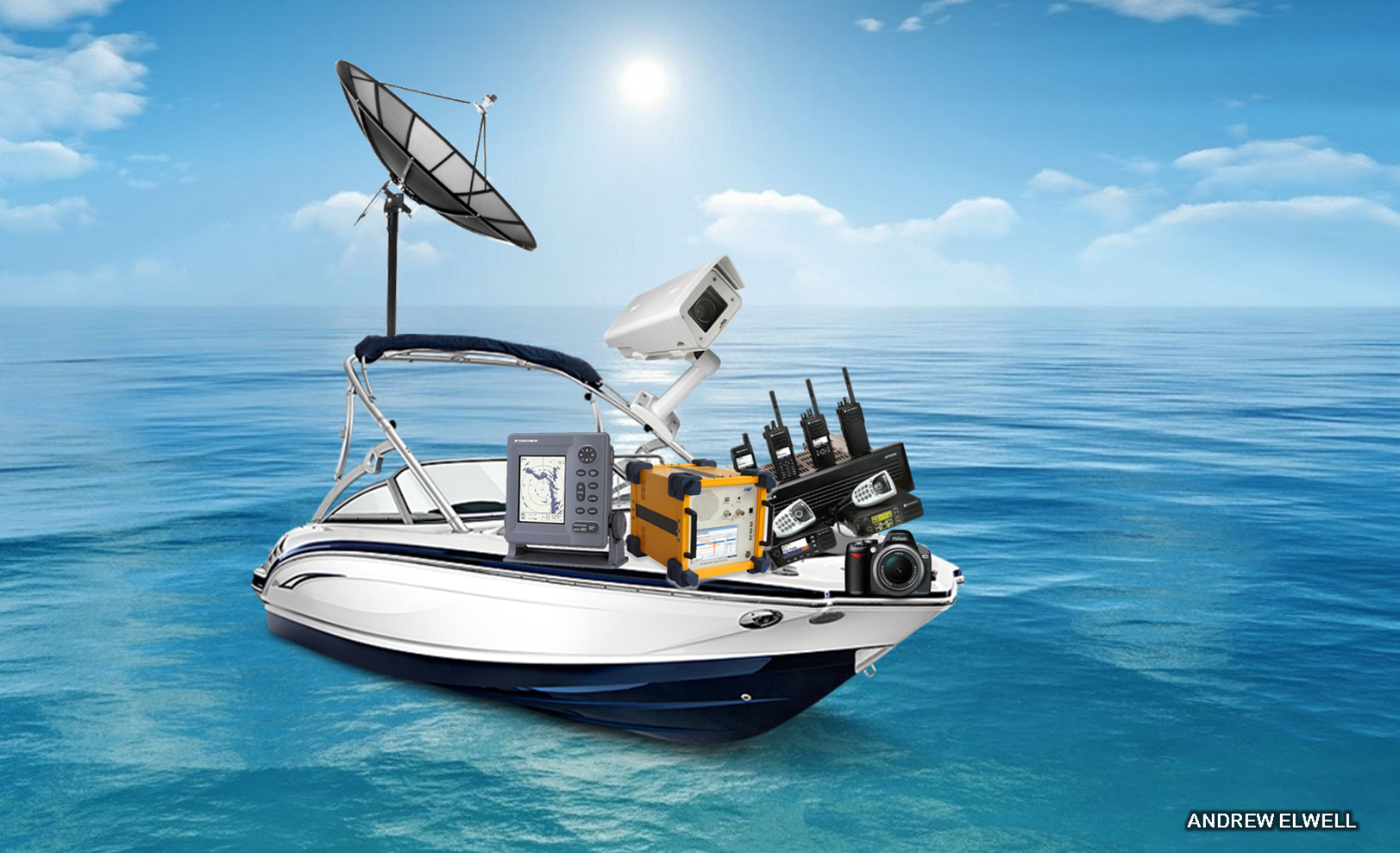
The technology used in maritime reconnaissance operations and coastal surveillance such as radar, communications and monitoring systems, RF equipment, datalinks and electro-optical sensors, is widely available but world events have recently made the acquisition of such equipment a necessity. Demand is finally catching up to supply.
MH370: Surveillance and intelligence
Following the search for MH370, and considering rising demand for surveillance systems for security and anti-piracy applications, Defence IQ takes a look a closer look at the technology available to Armed Forces and government agencies.
The strongest evidence of MH370’s location was drawn from data exchanges with an Inmarsat satellite, which indicated it landed in the Indian Ocean off Western Australia. The company has been at the forefront of airborne surveillance and intelligence innovations for decades. As an example, the global satellite heavyweight released Global Xpress this year, which is the first global Ka-band network that delivers secure, end-to-end wideband connectivity for seamless airborne, naval and land operations for governments and military end users. The technology represents a step-change in airborne intelligence, surveillance and reconnaissance capabilities and the company has already signed a Memorandum of Arrangement with the French military to use the network.
In August, Inmarsat demonstrated its intent to expand in Asia after opening its first office in China to capitalise on the telecoms and satellite opportunities that abound in the APAC region.
AGI, a US developer of commercial modelling and analysis software for the space, defence and intelligence communities, used its Systems Tool Kit (STK) software in the aftermath of MH370’s disappearance. The company said that the, “benefit of using modelling, simulation and analysis tools are to either turn up useful data on the aircraft’s position and/or help eliminate certain paths and areas.” The technology modelled the known radar and communications facilities along the planned path of the aircraft and analysed who could have seen the flight and when. It also plotted all ships in the area and created coverage grids of the search areas and performed coverage analysis using aircraft and ships.
Wider global demand for surveillance tech
Kelvin Hughes’ has a long history of developing surveillance and navigation radars, notably the Royal Navy standard KH1007 navigation radars, which have since been adopted by thirty of the world’s navies. In 2008 the company unveiled “the world’s first affordable fully coherent pulse Doppler surface search radar sensor,” called SharpEye X-Band Pulse Doppler radar.
Using Doppler techniques, SharpEye can detect periscopes, small glass-fibre boats and other targets in the clutter that normal radars cannot see and can also see them at greater distances. For armed forces and border agencies looking to track pirates, smugglers or drug-runners, this technology allows them to do so covertly, reducing the risk of being rumbled or put in harm’s way.
The company recently unveiled its new SMS port security system which incorporates a new lightweight version of SharpEye – known as the SharpEye SCV (Small Craft Variant) – and is intended for multiple applications in areas of ports and harbours that would benefit from autonomous 360 degree surveillance. The system is integrated with day/night and thermal cameras.
Terma, a Danish systems integrator, has a number of products for military and government coastal surveillance operations including the SCANTER 4000. The radar system provides simultaneous sea surface coverage and medium-range air surveillance. It has one common transmitter for surface and air and two independent receivers - one for signal processing and surface targets and one for signal processing and air targets.
Spain-based Indra recently collaborated with the Civil Guard to launch sea tests for the Perseus Project (Protection of European BoRders and Seas through the IntElligent Use of Surveillance). The programme began in 2011 and aims to develop new maritime surveillance capabilities for Europe. The trial operation involved the detection, tracking and subsequent detention of a vessel in the Strait of Gibraltar and was designed to test the interoperability of various maritime surveillance technologies.
Now forming part of the complete operational picture, demand for maritime unmanned aerial vehicles (UAVs) is also soaring as governments identify an enduring need to invest in intelligence, surveillance and reconnaissance systems. The rapid advancement of unmanned aircraft technology in the last four years has significantly reduced the costs of maritime surveillance and could be a significant growth area for the market. Maritime surveillance UAVs have seen remarkable attention from Armed Forces as the maritime domain continues to dominate economic self-interest and national security concerns. Securing shipping lanes, offshore resources, environmental surveillance and access-and-denial are just a few of the major concerns that most feel will continue to benefit from a more consistent unmanned surveillance effort, particularly as costs for these platforms decrease over time.
The emergence of al-Qaeda braches in South Asia is accelerating this requirement. Last week the group claimed responsibility for hijacking a Pakistani naval ship, intending to fire the vessel’s rockets at US ships in the Arabian Sea. Navies and surveillance agencies in the region are now actively acquiring new platforms and equipment to counter the rising threat of piracy and other illicit activities in Asian waters.
Looking specifically at the maritime UAV component, India has a growing fleet with Gemini-2 systems now being successfully tested in exercises coordinated with naval patrol boats and coastal police. Meanwhile, its ground-based Search MK II TUAV and Heron MALE comprise a comprehensive maritime observation network, with integration across other surface and air assets, as well as with civilian fishermen and digital cameras installed across 90 light houses along the nation’s coast.
Australia is also pushing for a $3 billion investment in the MQ-4C Triton to provide a network of broad area maritime surveillance. Triton is still in development but will cruise for 30 hours up to a height of 60,000 feet and offer a sensor suite that includes infrared and optical lenses.
The need for maritime surveillance capabilities in the APAC region will be discussed further at the Coastal Surveillance 2014 conference in Singapore in November. Considering recent events and regional market demand, the conference will provide a comprehensive outlook on current and future requirements including speakers from Thailand, Australia, Vietnam, Malaysia, Indonesia and the Philippines among others. Find out more by clicking the box below.

Airborne ISR & C2 Battle Management is coming to the United States....


In the spring of this year we merged our successful Airborne ISR and AEW events to bring you Airborne ISR & C2 Battle Management.
The most comprehensive aerial domain awareness event in Europe, it united over 150 ISR and AEW experts to debate how to increase the interoperability and effectiveness of joint ISR and AEW operations. View our videos from the event
Now from the 18th - 20th of November 2014 the event will be coming to Washington DC.

A United States Focussed Event

Uncovering the ISR and AEW requirements of the United States and the wider global ISR community, the event will facilitate as many officers of the US Armed Forces and members of the ISR community as possible, to have an opportunity to learn, share and connect with their national and international counterparts.
Join thought leaders and experts as they discuss solutions to streamlining the capability of existing assets and maintaining ‘eyes on target’. Learn from your colleagues and share best practice to understand how to maximise operational efficiency and enhance situational awareness. And take a front row seat as the community explore the possibilitiesfor future capabilities and how to meet the demands of potential operating environments.
Hear from the United States as leaders in Airborne ISR and Battle Management C2 and also gain an international perspective on current and future ISR capabilities and strategic plans.

Explosive Ordnance Disposal & Counter IED 2014


Counter IED and EOD missions were synonymous with the wars in Iraq and Afghanistan. But as these operations draw to a close, the continuing threat of IEDs in both military and civilian landscapes makes a Counter IED and Explosive Ordnance Disposal ready force no less important. The Middle East, North Africa and South America, as well as the West are all suffering from the proliferation of these weapons as a tool of terrorism and disruption, necessitating effective future planning and training.

Defence IQ is delighted to announce EOD & CIED 2014, to be held on the 17th - 19th November in Madrid.

Bringing together senior international military, police forces and defence industry, from Europe, North America, the Middle East and Africa, EOD & CIED 2014 will offer high level discussion on the key challenges facing the CIED/EOD community and engage in debate on the strategies and new technologies available for future force development.

By attending EOD & CIED 2014, you will come away with a detailed understanding of:

  • How militaries and police forces from across Europe, North America the Middle East and Africa are approaching C-IED & EOD operations, their current capabilities and equipment and how they will be developing their force over the next five years
  • The latest detection, protection, robotic and disposal solutions on the market and where you can expect the technology to be heading in the near future
  • How forces are approaching C-IED & EOD training, the challenges and current shortfalls, and what strategies are in place to make sure forces are fully ready to adapt to the continuing threat

12th Annual Military Radar Conference


Defence IQ’s Military Radar Conferencereturns on the 28 - 30 October in London for its 12th annual installment. Always a firm fixture for leading international military, industry and research institutes, Military Radar 2014promises a highly valuable opportunity to learn about the latest military radar systems and subsystems, their integration onto platforms and military applications.
Discussing key issues at the forefront of the military radar community, the conference will investigate achieving a multi-mission capability, advancing signals processing with more powerful and compact radar systems, and the technological developments necessary for operating in new challenging environments such as A2/AD, congested/contested scenarios. Emerging technologies such as cognitive radar will also be explored.
With a holistic insight into the military radar space, presentations will be given by prime contractors, military end users and research scientists to help you gain a full understanding of the up-to-the-minute technologies and requirements.

Introducing the only conference dedicated to the military use of smart devices for e-learning and simulation outside of North America


Due to overwhelming demand, we are holding our inaugural Military E-Learning & Smart Devices Conference, to support you – the pioneers usinge-learningsimulation techniques & smart devices for the training of military personnel.
This tri-service event will provide you with the opportunity to share best practice in what remains a relatively new and innovative side of defence capability.
Over the last ten years, a number of militaries have taken advantage of the substantial R&D spending by technology companies, and the subsequent uptake of smart devices in the civilian sphere. 
A soldier can review a lesson in an online drive or portal, complete an assignment with teammates online, or attend a class via video link, all from theirtabletsmartphone or desktop. The fact that service personnel are commercial users of this software should be no impediment to the military as apps can be (and have been) created to help assist with mobile learning and development, enabling students to learn on their own watch.  
Additionally, with the growth in the use of simulation and virtual reality exercises for pre-deployment cultural awareness training, judgement shooting, and scenario-based practice mission planning, militaries truly are riding the wave of the latest tech bubble. 
With a process of trial and error typifying the military’s approach thus far, there is still a substantial debate to be had as to how the defence community maximises the educational and operational benefits of this technology for their personnel’s development and performance.
This conference guarantees to fill that void.

Top reasons to attend Military E-Learning & Smart Devices:

  • Take part in the first conference dedicated to the military use of smart devices for e-learning and simulation outside of North America
  • Engage with and learn from the leading figures in e-learning, from North America, Scandinavia and Eastern Europe
  • Learn how to enhance your organisation’s mobility and performance using smart devices that most of your staff already use in their personal lives
  • Discover the latest developments in virtual reality and simulation technologies for enhancing the training of military service personnel
  • Watch, interact and try the latest gadgets with technology demonstrations from the leading industry players in e-learning and simulation

Top reasons to sponsor this event:

  • Hear about the outstanding progress of the pioneering R&D Directors working in military universities and academies from around the world
  • Display your innovative approaches to e-learning and simulation to the decision makers in doctrinal command through technology demonstrations and thought-provoking talks
  • Make the case to nations which are yet to adopt this new technology that these solutions are time-saving and cost-effective

Enhancing capabilities and increasing interoperability to save lives


The Search and Rescue Middle East Summitwill gather international experts from the search and rescue community, including members from regional Search and Rescue (SAR) teams, Rescue Coordination Centers (RCCs) and the public sector. This platform will allow participants to discuss the latest strategies, developments and technological advancements for enhancing SAR capabilities in the Middle East region.
The summit will cover current challenges that SAR organisations are facing:
  • Increasing coordination and interoperability of SAR operations
  • Rapid response during operations to ensure lives are saved
  • International cooperation for effective mass rescue missions
  • Integrating RCCs into existing emergency response structures
  • Optimising regional RCCs for more standardised and global communication
The objective is to develop, promote and share best practices with like-minded professionals engaged in SAR operations. The summit will also showcase success stories and, most importantly, provide opportunities for collaboration and cooperation between stakeholders.

Top 5 reasons to attend Search and Rescue Middle East:

  • Engage in discussions with international experts on the most critical SAR issues through interactive discussion sessions
  • Network with several international and national organisations involved in SAR operations
  • Learn about international strategies and guidelines that increase rapid response coordination
  • Understand the importance of standard procedures for effective SAR response in global disasters

International Armoured Reservists Symposium


The Royal Wessex Yeomanry (RWxY) and Defence IQ will be hosting the first International Armoured Reserves Symposium (IARS) on the weekend of 17-19 October 2014.
The ground-breaking event is intended to support the development of thinking behind Reservist use of the most complex ground manoeuvre platforms in the world, focusing on both theoretical and applied aspects of capability. It comes on the hundredth anniversary of the conception of the tank and will be held at the world-famous Tank Museum in Bovington, Dorset, UK – home of the Royal Armoured Corps.
The event comes at a time when the increasing complexity of platforms is being matched by the escalating costs of the soldiers required to crew and manage them. In fact, the cost of human resources – especially in terms of training and investment – is now the major part of the financial burden, despite (and in part because of) increasing sophistication of equipment. In order to maintain capabilities, militaries need to think in new ways and embrace new models of employment, overcoming enshrined norms.

Welcome to Armoured Vehicles Eastern Europe


The European armoured vehicles market is estimated to lead the world in terms of demand in the next 10 years and  the region will account for approximately a third of the global requirement.
Recent events in Ukraine have stimulated defence spending across Eastern Europe. In Ukraine itself, an additional 6.8 billion hryvnia ($697 million USD) has been added to the defence budget, a large proportion of which will be dedicated to mobility and weapons modernization. (Defense News, March 24, 2014)
Taking place in Warsaw, Poland, Armoured Vehicles Eastern Europe welcomes the community to the region for the first time. The event will showcase exciting acquisition and upgrade programmes in this key market. The Polish themselves are accelerating a number of procurements including a major overhaul of their light, medium and heavy armoured capabilty.
Much of the attention is focusing on a big Polish requirement for tracked and wheeled armoured vehicles. Requests for proposals are expected to emerge in the next year and the Polish  Land Forces’ armaments and experts are currently assessing the marketplace. The opportunities to partner with local industry are now key and the conference objectives include the encouragement of dialogue between international stakeholders and Polish defence industry.
Smaller requirements are also surfacing in the emerging Baltic market with Estonia, Latvia and Lithuania all exploring new IFV and APC options complete with advanced capability.
Regional defence cooperation is actively being promoted by the Polish and Lithuanians who are seeking to reactivate a POL-LTU-UKR battle group. This is just one of the measures being taken to strengthen military ties in the region and Armoured Vehicles Eastern Europe  welcomes international industry, military and government partners to share debate on the future threats, security issues and how the armoured vehicle will form a key component of future forcesWe look forward to seeing you there.

Sunday, 21 September 2014

US to Deliver Apache Helicopters to Egypt

by VOA News September 20, 2014
U.S. Defense Secretary Chuck Hagel confirmed Saturday in a telephone call with his Egyptian counterpart that the United States will deliver to Egypt 10 Apache helicopters to support that country's counter-terrorism efforts.
The combat helicopters had been scheduled for delivery earlier this year, but Washington suspended it last year after Egypt's new government cracked down on supporters of ousted President Mohammed Morsi last year. In April of this year, the U.S. announced it would lift the suspension.
Pentagon spokesman John Kirby said Hagel and Egypt's Defense Minister Sedki Sobhy also discussed regional security in the Middle East and North Africa, and the U.S.-led coalition to counter Islamic State militants.
Hagel thanked Sobhy for Egypt's role in brokering a ceasefire between Gaza and Israel.
Egypt to host new Mideast talks
​​The confirmation of delivery followed an announcement Saturday that Cairo would host a meeting between representatives of Fatah, led by Palestinian President Mahmoud Abbas, and Hamas leaders from Gaza on Monday.
Hamas led a 50-day deadly conflict with Israel that ended in a ceasefire on August 26.
Palestinian negotiators will meet with their Israeli counterparts on Wednesday.
Israeli shelling has left much of the Gaza strip in ruins and about 2,100 people dead. The toll on Israel was comparatively small, with about 70 people killed.
Shortly before the conflict, Hamas and the more moderate Fatah agreed to form a unity government under President Abbas' leadership. Israel considers Hamas a terrorist group and has condemned the move.
Palestinians want an end to the Israeli blockade of Gaza, construction of a seaport and the release of Hamas prisoners from Israel. Israel wants control of Gaza's borders to guard against the import of weapons.
Some information for this report comes from AP, AFP and Reuters.

Russia to Supply T-90S Tanks to Peru in Medium-Term: Rosoboronexport

11:16 20/09/2014
MOSCOW, September 20 (RIA Novosti) - Peru is interested in a supply of Russian T-90S tanks, but plans are currently considered a medium-term project, Russia's state arms exporter Rosoboronexport deputy general director Sergei Goreslavsky has told RIA Novosti during the exhibition, Africa Aerospace and Defence 2014.
'In collaboration with Uralvagonzavod, Rosoboronexport is working hard to promote the T -90S. This project continues to be the focus of Peruvian leaders, but is has earned a medium-term due to a number of political circumstances, such as the upcoming presidential elections,' said Goreslavsky.
Peru's Ministry of Defense announced the possibility of buying some 140 T-90S tanks in the future after receiving prototypes of the Russian battle tank for trials in May of 2013 in Lima. Peru currently uses 300 AMX-13 French light tanks in addition to 300 obsolete Soviet-made T-55 tanks.
Though the T-90S trials have proved successful, a contract to supply the tanks to Peru has not yet been signed.
According to Goreslavsky, the Peruvian leadership is focused on the project with aims of establishing production of the Russian Kamaz trucks, including military versions, which can potentially be used for civilian purposes.
The modified T-90S is fitted with an increased power multi-fuel 1,130-h.p. diesel engine, giving the vehicle a top speed of over 60 km/h (37 miles per hour) on roads and up to 45 km/h on rough terrain, according to its manufacturer, Uralvagonzavod .
The 46.5 ton tank's redesigned turret features a modernized 125-mm gun fitted with an autoloader, capable of firing 9M119M missiles, new fire control, navigation and communications systems, and a remotely-controlled mounted 7.62-mm machine gun. It has a crew of three, who are protected by explosive reactive armor and an NBC protection system.
The Africa Aerospace and Defence 2014 exhibition is being held in the South African capital of Pretoria from September 17 to 21. Rosoboronexport is one of many exhibitors participating in the premier exhibition of air, sea and land technologies.

The case for the Littoral Combat Ship

The U.S. Navy has hit back at its critics with a staunch defence of the Littoral Combat Ship (LCS) programme.Lt Robert Myers, a Pentagon spokesman for the Navy, charged that critics have rounded on the LCS because of outdated perspectives, stressing that the versatility of the ship is a formidable strength.
An uncertain future
Making the case for the LCS, Lt Myers said he was unsurprised by criticism because it was a “new concept, and people are generally sceptical towards things that are new.” Speaking about the Navy’s new clout, he described the LCS as “like having another tool in the toolbox,” which will provide the U.S. Navy with unprecedented presence and operational capability.
While he was adamant the LCS programme met requirements, he admitted uncertainty within the Navy about its future. He said the Navy has assembled a taskforce to evaluate its development, with deliberations currently taking place amongst the naval leadership before their findings are presented to Secretary of Defense Chuck Hagel
“We could continue with the LCS as it is, it could be modified, or it could be something entirely different,” Lt Myers admitted.
In February 2014, Chuck Hagel slashed the planned purchase of LCSs from 52 to 32, and authorised the Navy to investigate more “capable and lethal small surface combatant” alternatives. This followed concerns that the LCS were short of the Navy’s requirements. A recent report by the Centre for International Policy has called for the entire programme to be scrapped, deriding the ships as “under-armed, under-armored and under-crewed.”
Lt Myers was insistent that Hagel’s decision was not the death knell for the LCS, but rather a reflection of the tight budgetary constraints and an acknowledgement that the LCS is a “first attempt” at an entirely new class of ships.
The Navy has been reticent to accept the criticism though, despite acceptance that the LCS faces an uncertain future. Lt Myers explained the inevitability of the criticism, noting that early teething problems had unfairly clouded the debate. He added that LCS USS Freedom had been deployed early as part of a drive to “test and explore capabilities.” Lessons from the Freedom’s ten month tour, which included offering humanitarian assistance in the Philippines, had provided valuable lessons.
The “big picture”
“They’re not looking at the big picture,” Lt Myers said of his critics. “[LCS] gives us capability to operate in environments we didn’t previously have the capability to operate in.”
He also argued the economic case.
“What are we asking the ships to do? Do you want to take a Destroyer than costs $1 billion and [undertake] maritime security operations with it, when you can have a ship that costs $400 million to do that?”
Rather than burdening Destroyers and Cruisers with maritime patrol or support operations, these platforms will be freed up to return to their primary roles.
The new class of LCSs are capable of operating closer to the shore and are equipped to ward off attacks fromsmall, fast attack boats. This is crucial considering the Navy is tasked with combatting rising asymmetric threats, undertaking anti-piracy and anti-terror operations.
Lt Myers also played down suggestions of flaws in the ship’s defence, referring to a report he’d seen stating that the LCS could withstand anti-carrier mines. He said reports of LCS vulnerability were overstated, noting they were protected and armed “commensurate to the threat… [the LCS] is meant to encounter and the operations it is meant to execute.”
The LCS is based on a system of modulatory, which enables equipment to be swapped in and out dependent on the needs of the mission. A leaked naval report indicatedthat swapping modules could take three weeks, but Lt Myers suggested that such criticism was outdated, noting the success of recent trials in which modules were swapped within 96 hours. The modular system also allows technology to be upgraded over time, an innovation which will allow the ship to remain technologically up-to-date for the duration of its service, hoped to be around 30 years. This is a far more economical option than undertaking big, physical changes to the ship, which have previously been needed to implement upgrades, and also avoids having to remove the ship from service.  
A spokesman from Lockheed Martin, who together with Austal holds the contract for building the ships, was also adamant that critics had jumped the gun.
“Lockheed Martin is proud of our role in providing the U.S. Navy with the unique capabilities of the Littoral Combat Ship,” the spokesman confirmed via email. “Our Freedom class ships meet all the established requirements, and the LCS is a critical element of the Navy’s strategic plan. It is already proving its value to the Fleet.”
The future of the LCS programme lies in the hands of Chuck Hagel, who will have to assess whether LCS offers value for money or if the U.S. Navy’s answers lie elsewhere. In the meantime, fiscal restrictions will continue to shape the future of the US forces for years to come.

Saturday, 20 September 2014

The contemporary warship challenge


Without a doubt, surface warships are one of the most complex weapon platforms developed by humanity. They represent inherent compromises between safety and comfort in nature’s largest and potentially most dangerous environments, while simultaneously providing the ability to dominate a sphere (sub-surface, surface and air) often with radii measured in hundreds of miles protecting other naval platforms, merchant ships and littoral regions. The ability to dominate such volumes is fundamentally reliant on the capability of on-board sensors and the rapid and robust communications with external sources, coupled with the capability of various effectors to leverage the volume as necessary. All measured against financial constraints and dominance superiority. Often, to complicate matters further, warships have non-combat roles that drive their capabilities and increase their size, requiring a balance to be found with the principle roles, although 99% of platforms never actually fulfil their originally envisaged combat roles. 
The raison d’être for a naval platform is to dominate a volume, relying on sensors and communication systems. These systems need to have inherent capabilities to support the mission, which in turn influences the performance and thus the cost of individual elements making up the sensors and communications. Hence, nations must balance the risk of conflict over the life of naval platforms against fiscal requirements and necessary platform capabilities; such a balance is not always achievable, especially in contemporary financial environments. 
For this reason it is essential that both platform and system manufacturers develop systems quicker, cheaper, better and with reduced through life costs.  However, since the closing years of World War II, platform development costs and time from drawing board to realisation has increased dramatically. The Battle class Destroyer HMS Agincourt cost around £34 million (corrected for inflation), compared with c.£1 billion for a Type 45 Destroyer. Much of this is due to the significant increase in the complexities and development costs of the weapon, sensors and communication systems. Compare the cost of the three MkIV twin 4.5” turrets making up Agincourt’s main weapons system, to the Sea Viper system for the modern Type 45. 
During the gunboat diplomacy era, for the UK, it was relatively easy for the Government to despatch a warship or two to a potential trouble spot, often instantly resolving any issues. Such episodes occurred when the numbers of available platforms numbered around a hundred, albeit of varying capabilities from brigs through to first rate’s. Today, when the RN escorts are numbered around 20 and decreasing, performing such activities is a much more complex affair and in reality this is now only the preserve of the U.S. Navy. The convention for permanently maintaining a single platform at sea, suggests that three platforms are required, one undergoing maintenance and one performing training activities. Hence, from the six Type 45s that the RN has, the expectation is that only two will be fully operational available at any one time. Many navies, under financial pressure, have attempted to buck this trend, often to the detriment of quality and crew capability. 
In the context of increasing complexities and costs, reduced funding and increased capabilities of anti-naval effectors, the potential future for naval platforms is complex and becoming increasingly the preserve of richer nations to own and operate an effective number. Arguably the current threat paradigm, based primarily on air, sub-surface and surface launched anti-ship effectors (missiles and torpedoes) with ranges measured in 10s to 100s of miles has remained stable for the last 20-30 years. The development of the anti-ship ballistic missile (ASBM) threat, in the form of the Dong Feng 21 (DF-21), while currently only a real danger to larger platforms such as aircraft carriers, threatens to shift this paradigmsignificantly. Defending against ASBM threats, with their ranges measuring 1000s of miles, while not entirely impossible is incredibly challenging and is increasing the need for robust and rapid data and communication networks to enable suitable tracking of such challenging targets. 
To mitigate against these costs increases, some quarters suggest multinational collaborations to develop naval platforms and their systems. On the face of it, this sort of collaboration certainly appears attractive. However, peel away the layers of attractiveness and look at the individual elements of national requirements and the compromises necessary to achieve such collaboration is very challenging. This is particularly the case in Europe where navies with proud histories have differing ideas on how things should be done. One only has to think of the abortive NATO frigate replacement for the 1990s, followed by the slightly more successful Horizon programme between Italy, France and the UK, with the UK eventually pulling out to pursue what became the Type 45, to recognise the challenges of naval collaboration. This said such collaboration should always be explored in the context of reducing costs, perhaps in a modular manner if a platform level collaboration cannot be achieved. 
In summary, the need for naval platforms will continue for the foreseeable future, but the perceived capabilities required may make such platforms increasingly expensive, resulting in a compromise between hull numbers and capabilities. The fact that hull numbers are decreasing for the majority of navies validates this to some degree. This compromise is already driving some navies down the line of high-low platform mix, while such an approach may be valid in itself, it has potential problems, such as logistics, training and overall ability to project and dominate far from home waters. The development of ASBMs challenges the larger naval platforms, potentially driving the size of platforms down, against the wider non-combat roles, driving sizes upward. 
The conclusion must be that nothing is set; naval platforms will always be required, however, their mix of capabilities and the affordability of these capabilities are the areas of most variance. Nations have to decide on the capability and structure of their navies in the context of their defence environments, but more often than not fiscal policy always outweighs defence requirements, meaning that the downward trend in the number of hulls and of overall platform capability is set to continue for the foreseeable future.

Australia's Sea 1000 submarine project takes another turn

Australia’s Future Submarine Sea 1000 programme, which will replace its ageing fleet of Collins-class vessels, took another turn with Saab making a last minute offer for the work. The company has not made an official bid but claims to be talking to the Australian government about its capabilities.
It’s been a turbulent time for the programme as controversy erupted last month when a touring group of 16 Japanese submarine engineers and defence specialists apparently visited Adelaide-based shipbuilding company ASC without consulting local officials.
South Australian Defence Industries Minister Martin Hamilton-Smith claimed to be unaware of the visit and expressed indignation over its “secrecy”.
The tour provoked a backlash as the Future Submarine project has been lobbied to ensure local industry benefits from the majority of the work. As the submarines may employ Japanese technology, fears that manufacturing could be sent overseas have shadowed press attention.
The government responded that the visit was merely “business as usual”, suggesting that not all collaborative business or political visits are deemed necessary to communicate with local governments.
Australia recently signed a new defence science and technology agreement with Japan to mutually enhance systems.
A decision over the Collins replacement is expected to be announced in early 2015 at the latest.

Launching UAVs into Civil Airspace – an Indian Model

It’s 2013 and the G20 Summit Leaders have gathered in Mumbai, India under the ominous threat of widespread civil disorder and imminent complex terror threats. India’s security forces are heavily taxed on all fronts in the attempt to maintain situational awareness through deployed ground units, but, unknown to the wider public is the widespread deployment of medium altitude long-loiter tactical UAVs. Fortunately, both the technology and regulatory guidelines needed to transform this fictional unmanned airborne capability into a potent reality are already in place. So why is this scenario so remarkable? To date, it has never been accomplished in non-segregated civil airspace – even when UAS operations have been combat tested and proven in Iraq, Afghanistan and Libya.

In this webinar, retired Royal Air Force Squadron Leader and leading UAS consultant Keven Gambold directly addresses the steps required to transition UAS in the civil sector from fiction to reality. More importantly, he accomplishes this in the context of a lifelike complex case study: ‘Operation G20 Summit – Mumbai’.  

Join webinar leader, Keven Gambold, in his mission to detail the fundamental processes required to make UAS available and safe for operation in civilian airspace. Participants will learn:

The 3 principles and 5 steps required to establish operator and agency certification; to regulate unmanned systems in governed national airspace; and to successfully meet ELOS and TLOS standards
  • A detailed breakdown of Indian airspace classifications and where unmanned systems will most successfully operate within the region’s regulated airspace
  • The role of standards development organisations
  • Critical areas that need further research
  • Operator training and suggested syllabi specifics
  • Airworthiness standards that are currently being offered by manufacturers; and what these should be in the future

Additionally, Keven talks about the unique differences between ‘Sense and Avoid’ and ‘Sense and Respond’ systems. This and all of the significant problem areas listed above will be explained in detail - and dramatically illustrated in the context of 3 separate scenarios for ‘Operation G20 Summit – Mumbai’.

Join Keven for this unique webinar presentation – register yourself and your team today!
Unmanned Experts is a small, independent team of world-renowned UAV and UAS subject matter experts in a unique position to provide hands-on advice, assistance and mentorship to companies and government agencies at all levels of UAS operations. Our members include Civil and ex-Military UAS Pilots, Sensor Operators, Mission Commanders and Maintainers and Engineers. In support of our wider goals, we employ experienced Aviation Authority Members and Business Development Professionals - all with a focus on the unmanned systems realm.
UAS Concepts of Operation (CONOPS)
The UMEX Team members are stationed globally, with personnel in 6 countries, on 3 continents and spanning over 23 time zones. All have extensive operational experience in deployed and home-based unmanned operations.  From Small UAS (SUAS) through Tactical UAS (TUAS) and Medium Altitude Long Endurance (MALE) systems, Unmanned Experts also have significant exposure to numerous international UAV / UAS programs.  We can develop the correct Operational Concept (CONOPs) for your organization.  Our support ranges from simplebriefs to Upper Management through end-to-end UAS program establishment and management.
UAS Training
The UMEX members are award-winning instructors and evaluators in numerous UAS platforms.  We have extensive experience in UAS training system design and implementation and Unmanned Experts have close ties with courseware developers who have delivered leading-edge UAS training material to current operational platforms.  We offer a cradle-to-grave solution for your UAS platform: provision of a Training Needs Analysis to help you develop a complete UAV package, either generic or platform-specific.; developmental assistance with your UAS training courseware and offer top quality instructors to train-the-trainer.  The end goal is a self-sustaining UAS training program.
UAS Equipment
With over 260 UAV systems in operation or in development globally, the range of capabilities is broad.  Unmanned Expert members are uniquely familiar with the spectrum of available UAS and will match your specific requirements to the UAV most suitable.  We foster close links with Original Equipment Manufacturers (OEMs) and specialize in coordinating acquisition strategies. Likewise, our professionals are capable of recommending air vehicles, ground control stations, payloads and datalink systems.
UAS Business Development
The global market for UAV developers is estimated to reach US $50 Billion by 2020.  Unmanned Experts have been tracking UAS business opportunities and unmanned technological trends for several years and are well versed in moment-by-moment developments In the UAV arena.  We can help you position your product or services in this market and assist your Business Development team in capturing market share.
For more information on our personnel, training courses, previous programs and other capabilities, please visitwww.unmannedexperts.com.          

US personnel recovery training efforts

Americans involved in the field of Personnel Recovery (PR) count themselves among one of the most dedicated communities in the military and civil emergency domains, being that there is an ingrained commitment to seeing fellow servicemen and women returned home safely. Therefore, training for PR operations remains regular and consistent, with recent military exercises now providing more in-roads for external agencies and nations to cooperate in ways that emphasise a universal refusal to leave no one behind.
Joint Services
May 2014 saw the welcome return of ANGEL THUNDER, the largest and most realistic joint service, multinational, interagency combat search and rescue exercise designed to provide training for PR assets using a variety of scenarios. These scenarios simulate deployment conditions and contingencies with PR forces training through the full spectrum of relevant capabilities alongside ground recovery personnel, air assets, special forces teams and federal agents. The exercise was undertaken between the Pacific Ocean and Davis-Monthan AFB, Arizona.

More than 2,700 participants took part in the operation and this year saw additional involvement from Canada, Colombia, France, Germany, Ireland, Italy, the United Kingdom, and Sweden, with the Commander of the Royal Saudi Air Force also observing the proceedings. Aside to PR, combat search and rescue (C-SAR) training was provided for combat aircrews, pararescue, intelligence personnel, battle managers and joint SAR personnel. For the first time ever, a charity specialising in PR was also invited to take part. These efforts to progress integration demonstrate a trend that will look to be continued next year.
The exercise included a wide variety of scenarios. One example involved 30-40 casualties strewn over a wide area with no communications, to which rescuers had to set a pathfinding system to locate the injured, assess their needs and call in relevant MEDEVAC support. Notable this year, in terms of equipment, was the prevalence of unmanned aerial systems and artificial intelligence systems, as every service continues to increase its digital capabilities.
"Personnel recovery missions are often short term operations because they are a response to a crisis situation," said Col. Sean Choquette, Commander of the 563rd Rescue Group. "By conducting Exercises like ANGEL THUNDER, we are working to build up relationships ahead of time and to establish standard operating procedures so it's easier to execute the mission than if the relationship did not exist and you have to build trust along the way."
Air Force
On 27 August, the 412th Test Wing undertook a training exercise near to Edwards Air Force Base involving a scenario in which an F-16 crashes 14 miles east of California City in the desolate Mojave Desert. Exercise DESERT WIND 14-06 was designed to assess the Wing’s response capabilities when it comes to the recovery of personnel and aircraft wreckage. While an Air Force initiative, the exercise was performed in collaboration with the local California City Police and Fire Departments (hypothetically, the first responders in a real life scenario), which were also being graded on their procedures by respective officials.
In the designated simulation, the Edwards AFB tower was notified at 8 a.m. by Ridley Mission Control that an F-16 was flying chase with an F-15 when the aircraft collided, causing the former to hit the ground. Crisis Action Team (CAT) and Emergency Operations Center (EOC) members were immediately recalled to their stations while reports from off base were coming in of a loud crash and smoke. The first responders arrived on scene and identified the object as a military jet, communicating the news to Edwards, who then sent in their own fire fighters.
Fighter jet crashes pose a particular hazard when responding because of the presence of weapons and chemicals onboard. Jets made out of composites can also release toxic materials when burning. Where the F-16 was concerned, responders had to check for the presence of (very flammable and toxic) hydrazine. The Air Force fire department is therefore prepared with the necessary training and equipment to handle such accidents, but readiness levels are never allowed to slack.

After removing the immediate threats of fire and chemicals, the AFB firefighters established an entry control point to keep the public before staff on the Wing’s Emergency Management Office arrived to establish a command centre. The Wing Inspection Team, a newly formed unit, observed the exercise while CAT and EOC members communicated instructions and decisions from the base. As fighter aircraft are designed with specific cockpit safety measures, personnel needed to test their ability to release the pilot (a mannequin) from the ejection seat.
DESERT WIND 14-06 represents just one of several annual exercises undertaken by the 412th TW to prime emergency response and readiness.
Marine Corps
Furthering the level of collaboration taking place with Eastern European partners and allies at this time, the U.S. Marine Corps worked with soldiers from the Slovenian Army in August during the IMMEDIATE RESPONSE 2014 exercise, held in Vipava, Slovenia. While the exercise involves over 900 personnel from mainly U.S., Slovenian and Croatian armed forces, as well as smaller contingents of other European nations, special attention was placed on the response procedures required when combat injuries prove fatal and appropriate measures are needed to expedite the safe return of human remains.

Marines with Personnel Retrieval and Processing (PRP) Company, 4th Marine Logistics Group, Marine Forces Reserve, travelled from Atlanta, Georgia to instruct Slovenian personnel on the meticulous –and often emotional – process of repatriating fallen soldiers.

For the USMC, mortuary affairs begins with carefully documenting everything that the Marine is carrying and wearing, securing those items in a transfer case and wrapping a U.S. flag around it for a respectful transport back to the Marine’s family.
The U.S. military, alongside other NATO allies, are keen to continue close collaboration with Slovenia and all other partner nations that have made a significant contribution to the Afghanistan campaign. Methods of personnel recovery naturally vary from one country to the next, but the sharing of individual processes is helping each to restructure and refine best practice, which becomes increasingly important to a future of further coalition engagement, and one in which multinational teams may respond together to natural disasters or other crises.
Marines provided basic procedure classes, beginning with an overview of the significance of the activity and going through their routine in principle followed by a hands-on scenario-based exercise. Simulated training was then provided in a mock morgue, to which the Slovenian personnel applied their lessons “seamlessly” under Marine observance.
Lance Cpl. Andrew Weber, a team member with PRP, said, “Training here in Slovenia gives us a chance to train alongside the soldiers from our partner nations. All the countries involved get the chance to expose each other to how we conduct things. In my opinion, this is bigger than just you and me, bigger than the Marines; it’s a worldwide partnership.

F-35 News Round Up: 18th September 2014

Work leading up the completion of the multinational F-35 program is largely on track, the F-35 Lightning II Joint Program Office executive officer said in remarks during the 2014 Air Force Association’s Air & Space Conference and Technology Exposition here Sept. 15.
Lt. Gen. Christopher Bogdan reported steady progress across all elements of the program, though he acknowledged lags in some aspects due to development and testing complexities.
“If we’re going to deliver a total weapons system to partners and to the services,” Bogdan said, “we’ve got to take a holistic weapons system approach wherever it matters, not just on the airframe.”
Bogdan credits program re-baselining in 2012 in helping to establish realistic objectives and timelines for completion of development and testing. Program delays like the engine issue that caused a fire in June do not, he said, necessarily translate into a major breach in the program.
The general also reported additional engine fixes should be decided by mid-October, and he expressed confidence it would not impact the Marine Corps’ planned initial operational capability date of summer 2015 or the Air Force’s planned initial operational capability date of summer 2016.
Sequestration-related budget reductions and impending limits to be imposed by the 2016 Budget Control Act add to the complexity of bringing the F-35 program to full standing; however, Bogdan said the United States is committed to doing the very best it can for the warfighters, taxpayers and partners to ensure that the F-35 meets the nation’s defense needs.
“I have faith in the Department of Defense leadership when they tell me and the services that if sequestration comes, ‘We’re going to do everything we can to minimize impact on the program,’ because that is what we need to do,” Bogdan said.
Bogdan also said three regional capability centers in North America, Europe and the Pacific will engage engineering expertise and capability of joint and international partners including the United Kingdom, Italy, the Netherlands, Turkey, Canada, Australia, Denmark and Norway to build a global sustainment posture that will reduce program operations, support costs and enable F-35 global reach. [USAF]